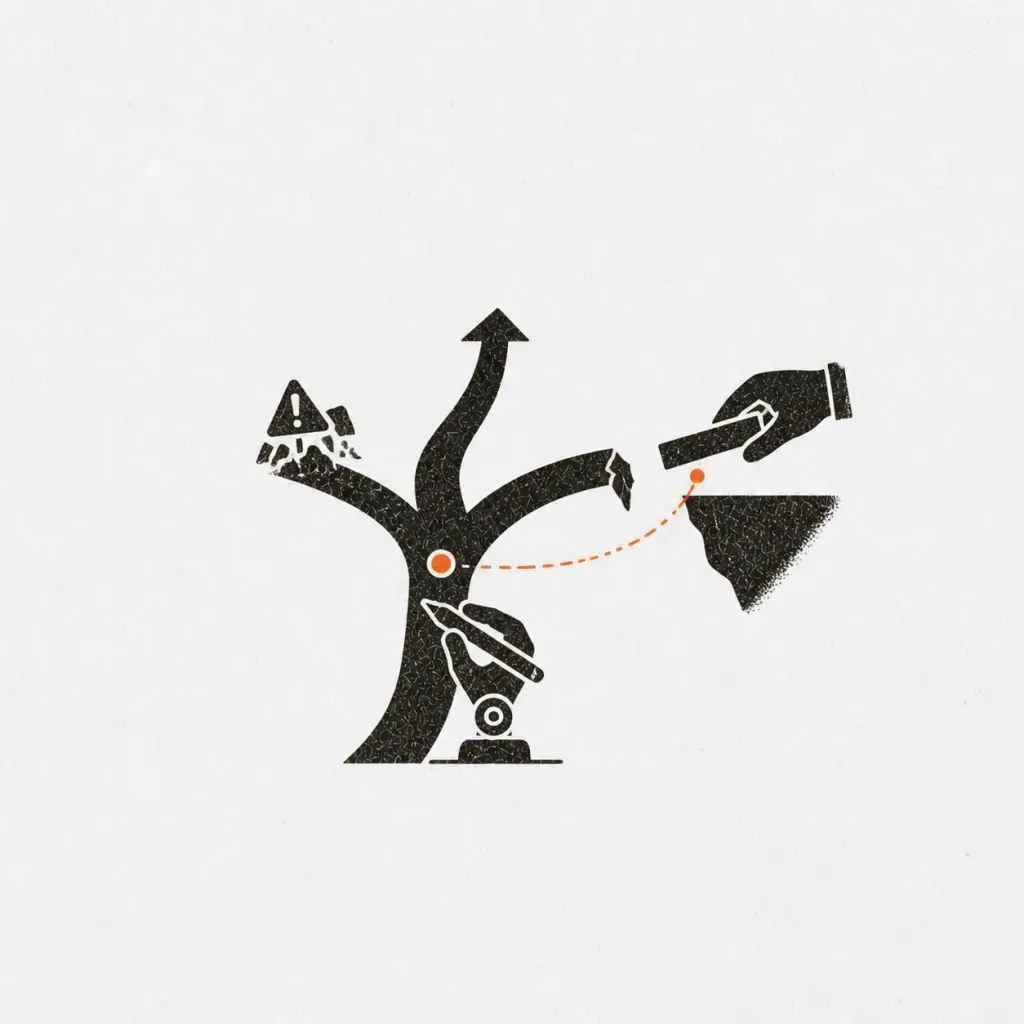
An agent that asks about every detail is exhausting. An agent that never asks is dangerous. The goal is not more or less autonomy. It is a visible boundary between implementation choices and product decisions.
“Use your best judgement” is not a boundary
That instruction sounds empowering, but it gives the agent no way to distinguish a reversible code choice from a decision about billing, permissions, or user data.
The model may be capable of proposing an answer. That does not mean it has the authority or missing context to choose it.
Imagine a request to hide cancelled subscriptions from the dashboard. The interface change is easy. Whether those records should disappear from invoices, exports, support tools, and retention reports is a product and compliance decision. A confident implementation cannot replace that missing authority.
This is not only a property of coding agents. Every crawler that reaches a site announces who it is, and thirty days of my own logs showed a quarter of the traffic wearing those names asking for credentials. A claim made confidently is still only a claim.
Confidence is not evidence that the decision belongs to the agent.
Divide the work into three zones
- 01Continue. ▶️
Local, reversible implementation choices that follow an existing pattern and contract.
- 02Verify. 🔍
Choices that can be resolved by checking the schema, tests, documentation, or current interface.
- 03Ask. 🛑
Choices that change product meaning, public behaviour, security, cost, or irreversible state.
This keeps the agent moving through ordinary work while protecting the moments where guessing is expensive.
The zones should be written in terms of consequences, not file types. Editing CSS may still require an answer if the change hides a legal disclosure. Updating a database can be safe when it is a reversible local fixture. Risk comes from what the action means, not where the code lives.
Five signals that should stop the build
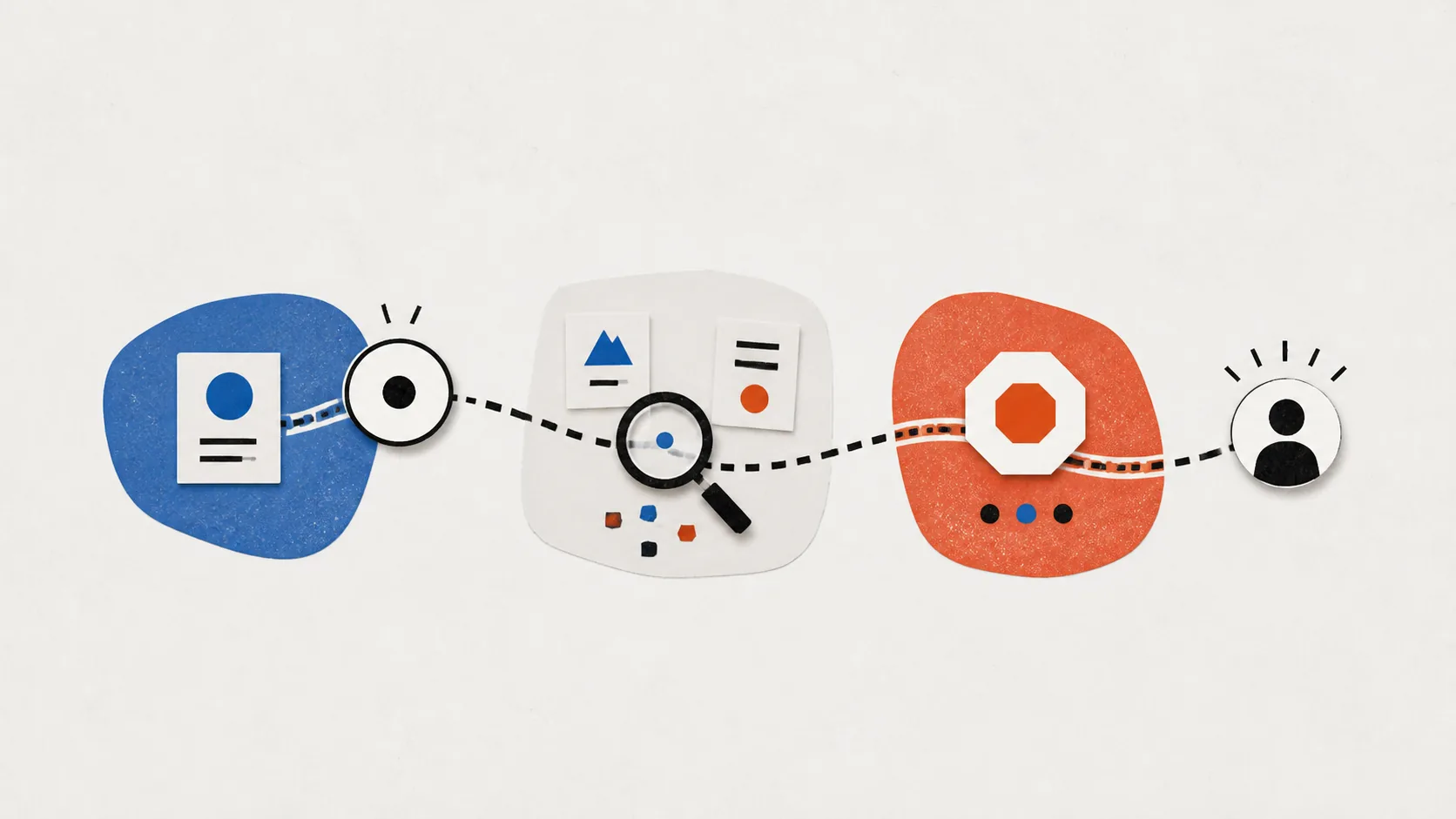
- The public contract is unclear.The change affects an API, integration, URL, or behaviour other people may rely on.
- The action is hard to reverse.Data deletion, migrations, access changes, and external writes need explicit direction.
- Two sources disagree.Code, docs, tests, and product language do not describe the same behaviour.
- Security changes meaning.The task alters who can see, create, edit, or delete something.
- The user outcome is ambiguous.Several implementations are valid, but each creates a different product.
One signal is enough to pause the affected branch, not necessarily the whole task. The agent can still finish safe discovery, identify the exact contract, run read-only checks, and leave the repository in a clean state. A good stop preserves momentum without crossing the boundary.
A good escalation brings the decision closer
“What should I do?” gives the whole problem back to the human. A useful escalation explains the discovery, the options, and the consequence of each.
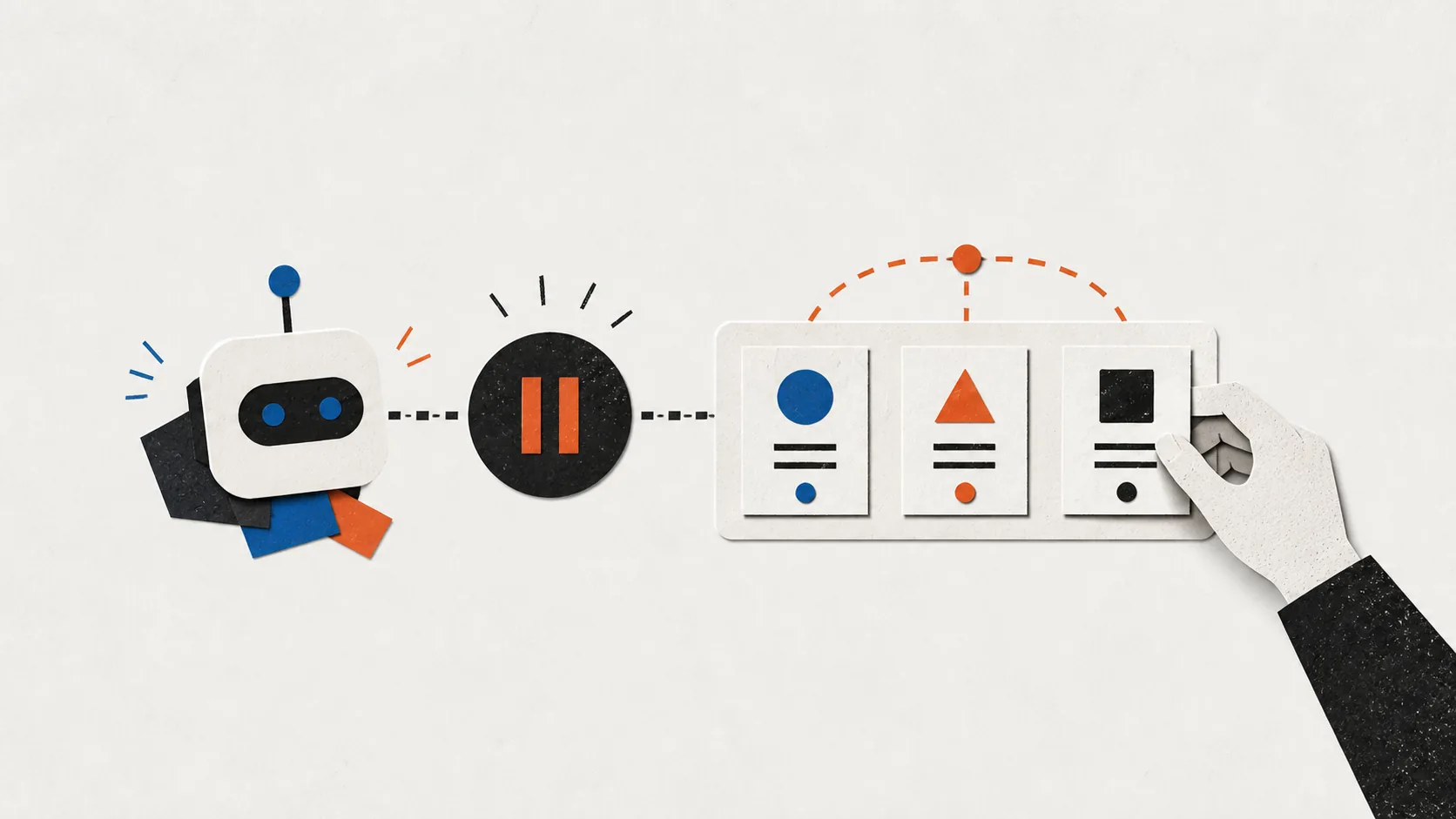
DiscoveryWhat did the agent find that was not covered by the task?
ImpactWhich contracts, users, or data could be affected?
OptionsWhich two or three realistic paths are available?
RecommendationWhich path best fits the current evidence, and why?
Safe stateWhat has been completed without crossing the decision boundary?
A concrete question is easier to answer: “The API stores `draft`, while the interface now says `exploring`. I can change only the label with no migration, or rename the stored value and update exports. The first option preserves every public contract. Should I keep the stored value?”
That question exposes the real choice, offers a recommendation, and gives the human enough information to answer without reopening the whole investigation.
Make the answer easy to resume from
After the human chooses, the decision should become durable context. Record it in the relevant document, test, contract, or build log before implementation continues.
Otherwise the next agent will reach the same fork with the same missing information.
A useful checkpoint records four things: the decision, the evidence behind it, the parts of the system it affects, and the next safe action. It should also name what was deliberately left unchanged. That prevents a narrow approval from being interpreted as permission to redesign the surrounding product.
When work resumes, the agent should restate the chosen boundary, recheck any state that may have changed, and continue from the saved checkpoint. The pause is complete only when the implementation and its acceptance evidence agree with the human decision.
Checkpoint rule
A resolved escalation is not finished until the product has a place where that decision can be found again.Further reading
Primary sources behind this note
- Anthropic: Building effective agentsWhere autonomy helps, where a human belongs in the loop, and how to design the handover.
- Anthropic: Claude Code best practicesWorking practices for a coding agent, including when to let it plan before it acts.
- Anthropic: Demystifying evals for AI agentsHow to tell whether an agent behaved correctly across a multi-step task.
Reader response
Was this field note useful?
Bring the system together
Need clearer boundaries before the next build?
Apply for a Clarity SprintField notes by email
Thanks, you're on the list. ✓
Email signup did not go through. Please try again.
A short note when there is something worth sharing. No spam.